Booking choice: The Wat Pho and Wat Arun walk, ★ 4.6 (1,803). Check dates Compare the options below
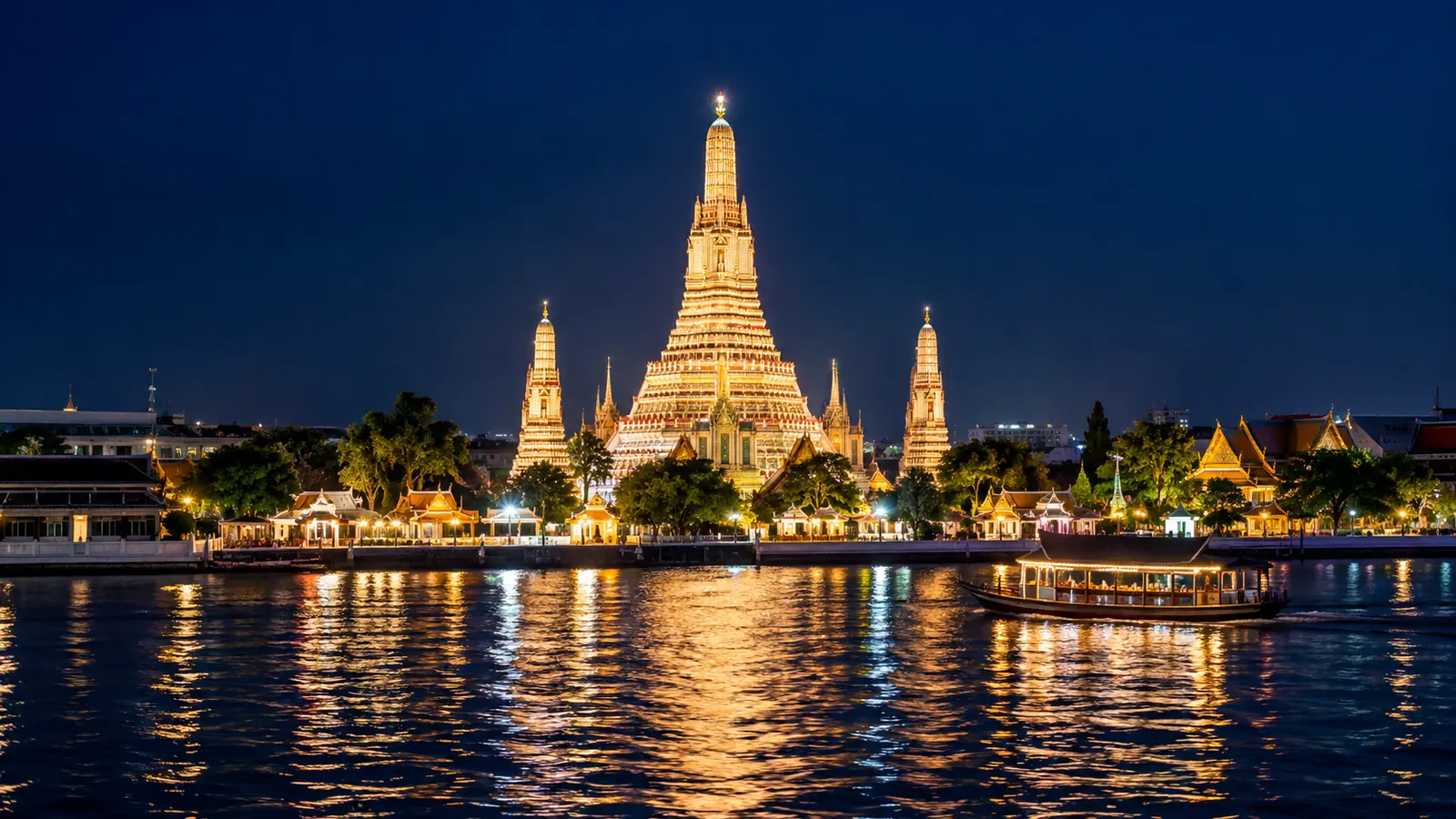
Wat Arun Ratchawararam, the Temple of Dawn, stands on the west bank of the Chao Phraya, across the river from Wat Pho. It is a working royal temple with monks, and also one of the easiest big sights in Bangkok to visit on your own. The entry system is simple: one counter, one ticket, cash only in practice. The only real questions are when to go, how high you can climb and what is worth your time once you are inside.
This guide answers those questions in the order you meet them: the fee, the hours, what the ticket covers, the climb, a walk through the grounds and a short history. How to reach the pier is in how to get to Wat Arun, and what to wear is in the dress code guide.
The quick answer
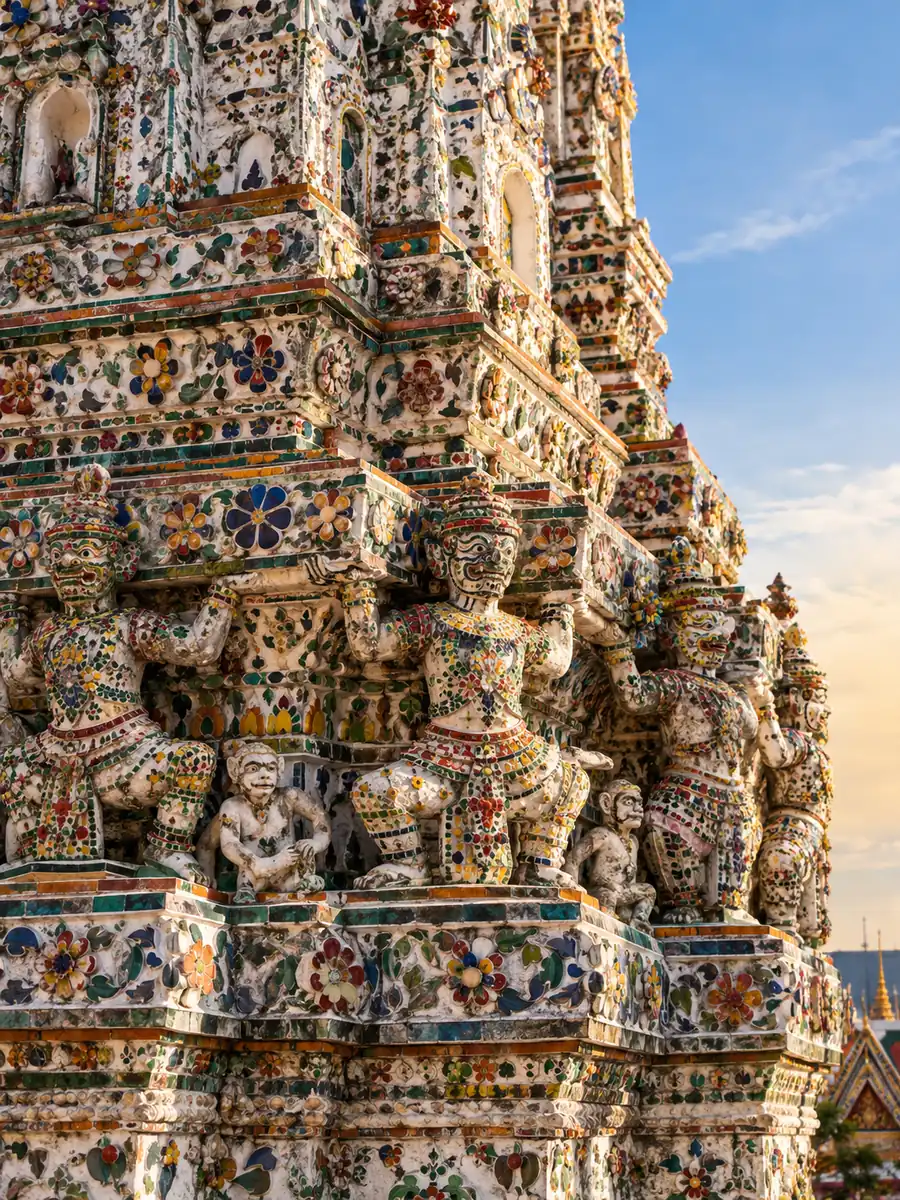
Opening hours: 8 am to 6 pm every day; the ticket counter stops selling at about 5:30 pm. Entry: foreign visitors pay a small entry fee in cash at the ticket counter by the gate, and Thai citizens don't pay. The ticket usually comes with a small bottle of water. There is no online ticket, so there is nothing to book ahead, and any stranger selling tickets away from the counter can be ignored. Bring cash in small notes. What you see: the central prang covered in Chinese porcelain and seashells, the four smaller prangs around it, the ordination hall (ubosot) with a Buddha image said to have been designed by King Rama II, the cloister, and the two giant guardians at the ordination hall gate. The climb: you can go up the very steep steps of the central prang only to the lower terrace; the upper levels have been closed since the restoration of 2013 to 2017. Time: 45 to 90 minutes. Tours: most guided tours leave the entry fee for you to pay at the gate; the evening tour and the private tours are the exceptions.
What is the entrance fee for Wat Arun Ratchawararam?
Foreign visitors pay a small entry fee in cash at the ticket counter by the gate; Thai citizens don't pay. The ticket usually comes with a small bottle of water, and there is no online ticket to buy in advance.
The ticket counter is at the main entrance, a short walk from the Wat Arun pier where the cross-river ferry lands. You pay, take your ticket and walk in. The fee is modest, much less than the Grand Palace, and it is the same whether you come alone or with a guide. Bring cash, ideally small notes, because you should not count on paying by card. Keep your ticket until you leave.
Because the ticket is sold only at the gate, you never need to buy it from anyone else. Some travel sites sell packages that sound like an online ticket; look closely and they are guided tours or boat passes, and most of them still leave the entry fee for you to pay on the day.
How much is the entrance fee at Wat Arun, and which tours include it?
The fee is small, and most tours do not include it: you pay it yourself at the gate. The evening tour and the private tours are the exceptions, so check the includes box before you book.
Here is how the tours on this site handle the ticket. The Grand Palace, Wat Pho and Wat Arun tour (4.8 from 5,771 reviews) and the Wat Pho and Wat Arun walk (4.6 from 1,803 reviews) leave all entry fees to be paid at each gate on the day, and so does the half-day small-group tour. The evening tour includes the Wat Pho and Wat Arun tickets. The private tour of Wat Pho, Wat Arun and Wat Hong includes the tickets, and the private Grand Palace tour includes the admission fees, with Wat Pho and Wat Arun as options.
Paying the fee yourself is quick: even with a guide, you stand at the counter for a minute or two. Every tour listed here gives a full refund if you cancel up to 24 hours ahead. The full list is on the homepage.
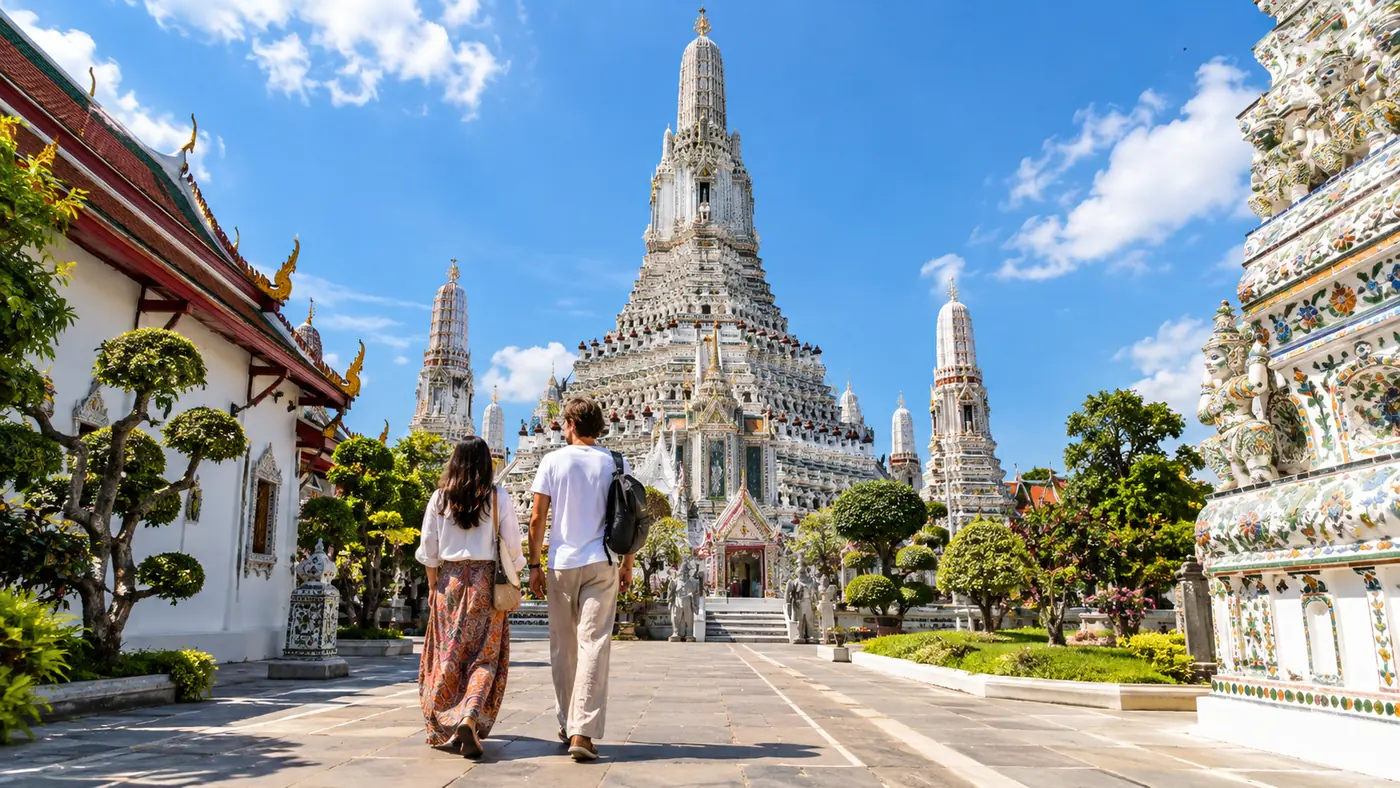
Wat Pho and Wat Arun in three hours on foot, with the ferry, a fresh coconut and a guide who explains the porcelain and the giants.
Check dates for the Wat Pho and Wat Arun walkWhat time does Wat Arun in Bangkok close?
Wat Arun is open from 8 am to 6 pm every day. The ticket counter stops selling at about 5:30 pm, so arrive by 5 pm if you want time to climb and walk around.
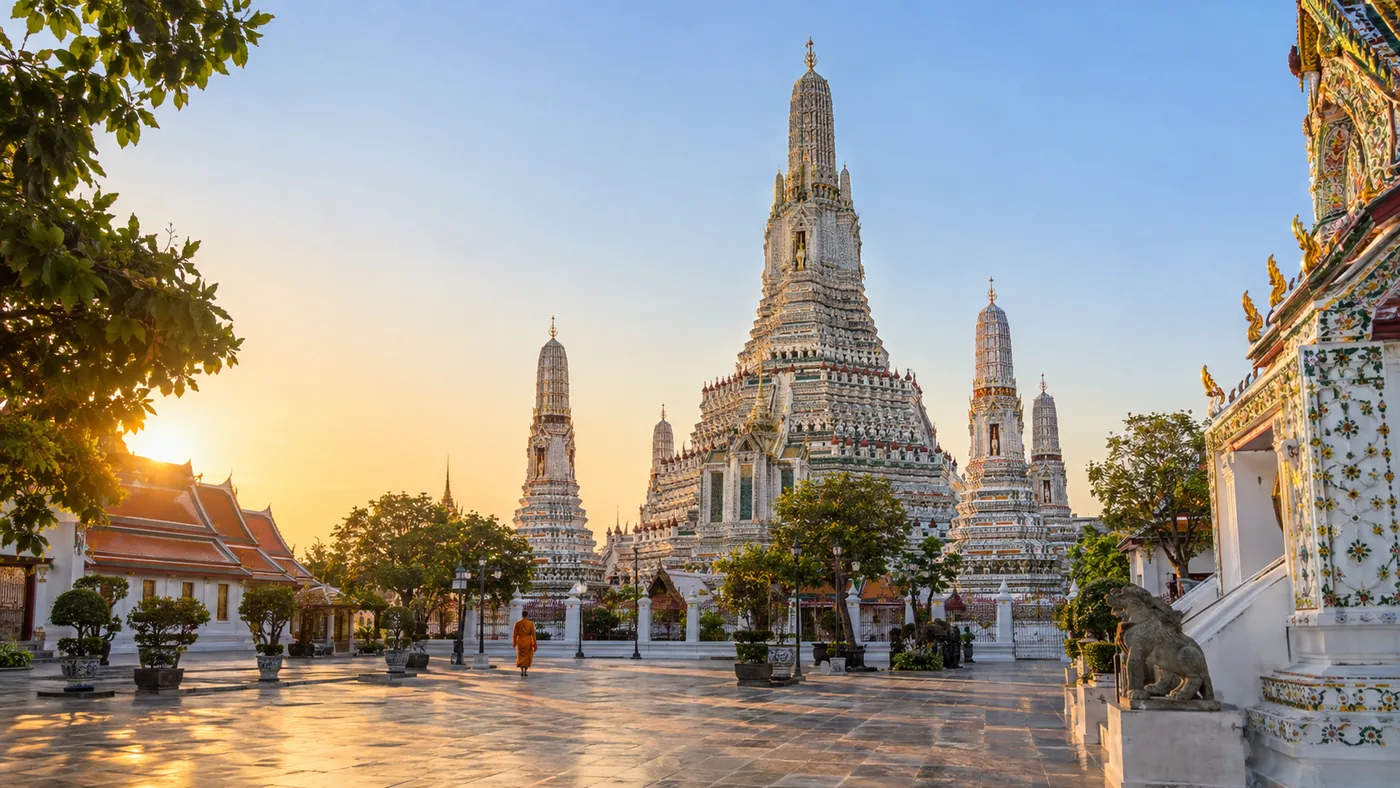
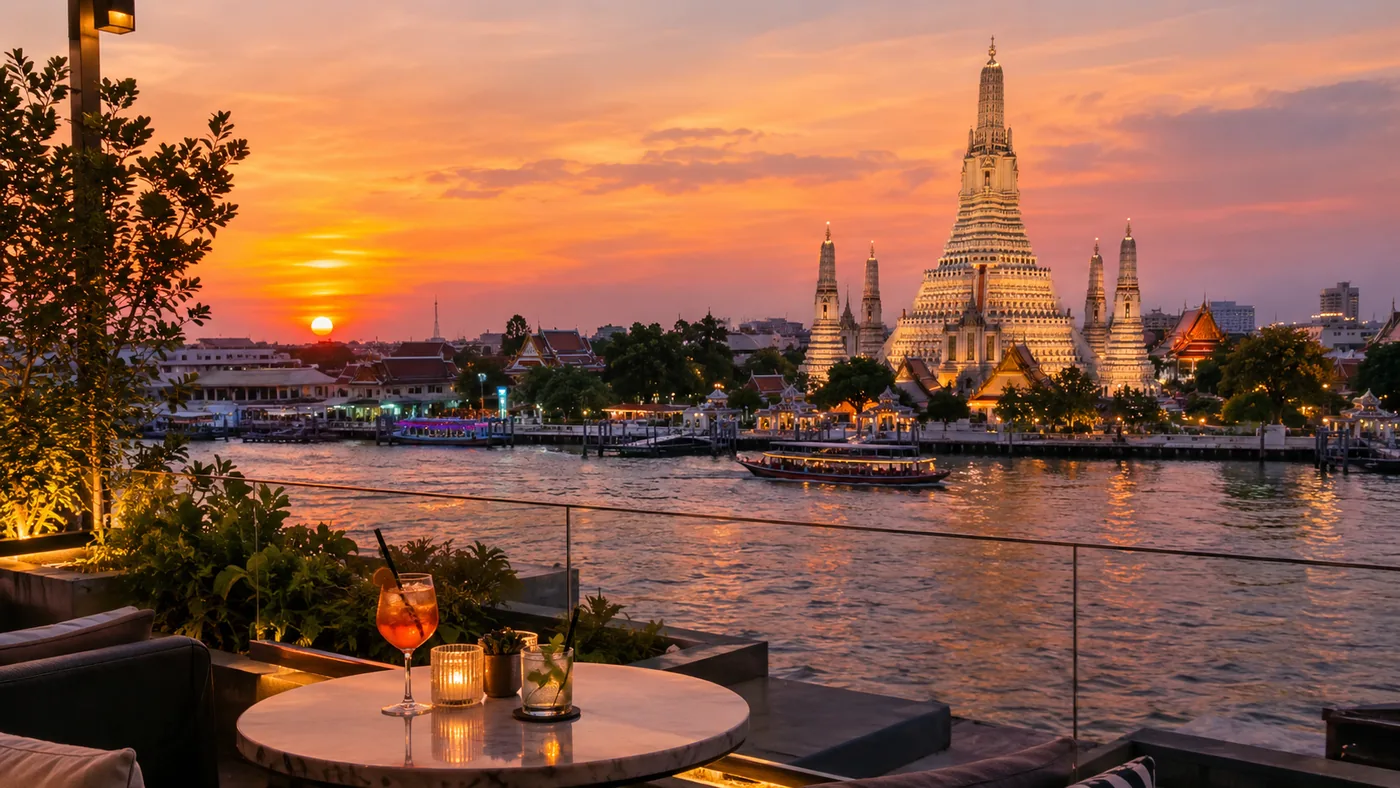
The temple opens every day of the year, including weekends. Climbing reportedly stops at about the same time as the ticket sales, so the lower terrace is not a sunset viewpoint: it is a daytime one. After 6 pm the grounds close, but the prang is lit after dark and looks its best from the other bank of the river.
The hours of the neighbours matter if you combine them. Wat Pho is open from 8 am to 7:30 pm. The Grand Palace is open from 8:30 am to 4:30 pm, and it sells tickets only until 3:30 pm, as its official practical information page explains. The best hour of the day for each is in the best time to visit.
| Place | Open | Last tickets |
|---|---|---|
| Wat Arun | 8 am to 6 pm, every day | About 5:30 pm |
| Wat Pho | 8 am to 7:30 pm, every day | Check at the gate |
| Grand Palace | 8:30 am to 4:30 pm | 3:30 pm |
| Cross-river ferry from Tha Tien | All day until the evening | Pay the coin fare at the pier |
What does one Wat Arun ticket cover?
One ticket takes you into the temple grounds open to visitors: the central prang and its lower terrace, the four smaller prangs, the ordination hall, the cloister around it and the gate with the giant guardians. Recent visitors report that the climb is part of the same ticket.
The table shows the parts of the temple in the order most people see them, with the time each usually takes. The times are our own estimates for an unhurried visit. Some parts, such as the ordination hall, may be closed for ceremonies at times; when monks are at prayer, you can wait outside or come back later.
| Part of the temple | What you see | Time |
|---|---|---|
| The riverside and the courtyard | The prang rising above the river, stone figures and small shrines | About 10 minutes |
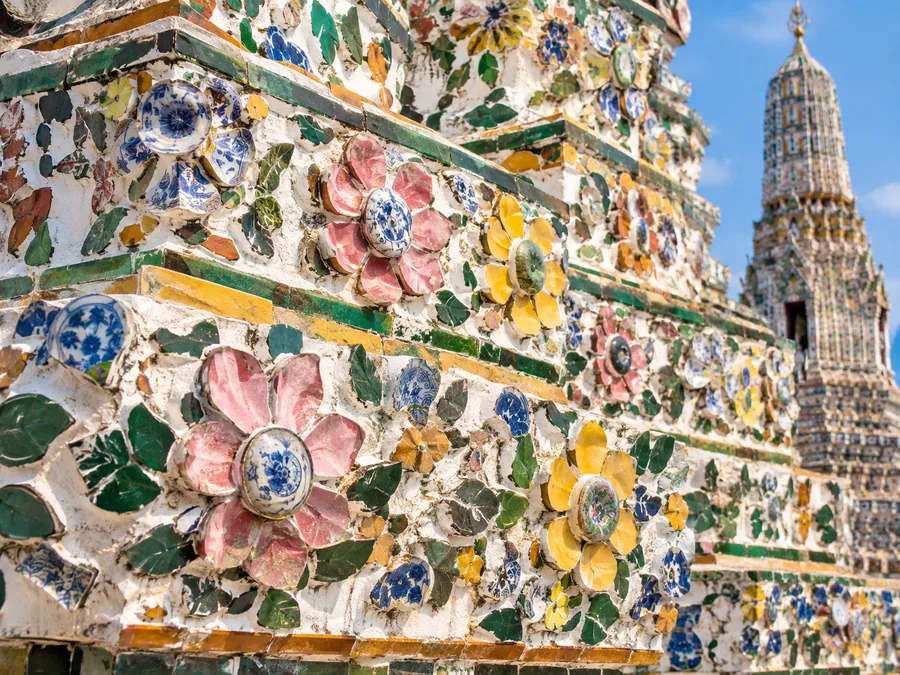
| The central prang, from the ground | The porcelain flowers and seashells on every tier, and the guardian figures around the base | About 10 minutes |
| The climb to the lower terrace | Very steep steps, then a view over the river to Wat Pho and the Grand Palace | 15 to 20 minutes up and down |
| The four smaller prangs | Four satellite towers in the same porcelain style at the corners | About 5 minutes |
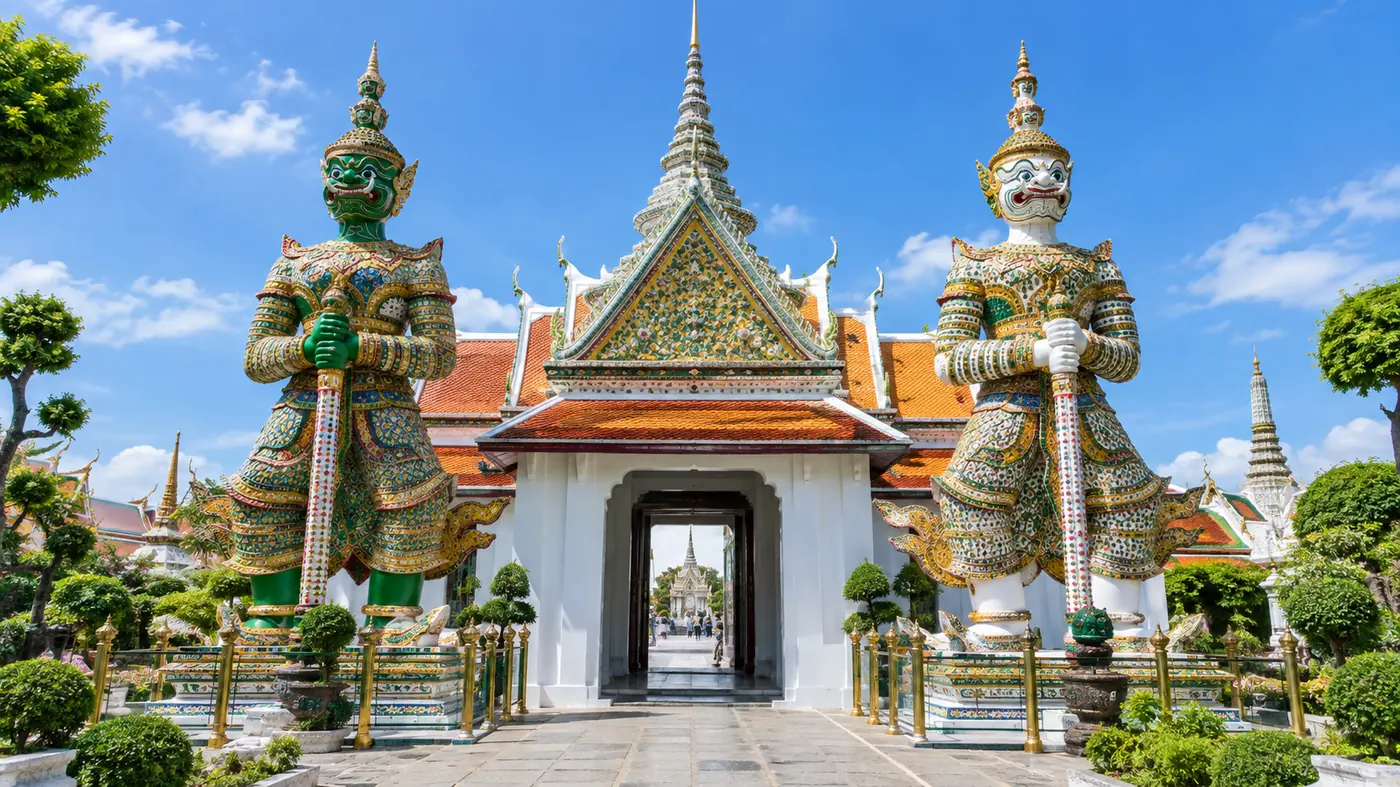
| The ordination hall gate | The two giant guardians from the Ramakien, one green and one white | About 5 minutes |
| The ordination hall (ubosot) | The Buddha image said to have been designed by King Rama II, and painted murals | About 10 minutes |
| The cloister | Rows of seated Buddha images around the ordination hall | About 10 minutes |
Can you climb Wat Arun?
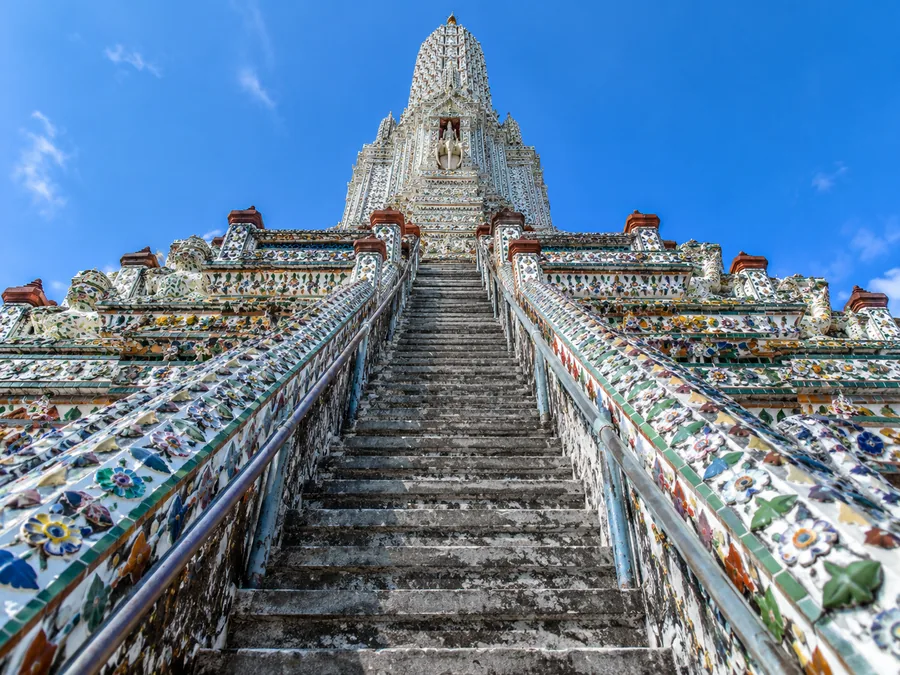
Yes, but only to the lower terrace of the central prang. The upper levels have been closed since the restoration of 2013 to 2017, and the steps up to the terrace are very steep.
- How steep: the steps are high and narrow, closer to a ladder than a staircase in places. Hold the rail on the way up and on the way down.
- Coming down: most people find it easier to come down backwards, facing the steps, as on a ladder. Take your time and let others pass.
- Shoes: shoes with a good grip help more than anything else. Put your phone away and keep both hands for the rail.
- Vertigo: if you do not like heights, you lose little by staying on the ground. The porcelain detail is just as good from the base.
- Heat: the steps face the sun for much of the day, so climb early in the morning or late in the afternoon.
- The view: from the terrace you look straight across the river to Wat Pho and the roofs of the Grand Palace.
Is it worth going inside Wat Arun?
Yes. From the river you see only the shape of the prang; inside, you see the porcelain flowers up close, climb to the terrace, meet the giant guardians and visit the ordination hall. For the price of a small ticket, it is one of the best hours in Bangkok.
A walk through the grounds in order takes about an hour. Start at the riverside and look up at the central prang, then walk around its base to see the tiers of porcelain and seashells. Climb to the lower terrace if you are comfortable with steep steps. Come down, walk past the four smaller prangs and cross to the ordination hall. At its gate stand the two giant guardians, green Thotsakan and white Sahatsadecha, characters from the Ramakien, the Thai version of the Ramayana.
Take your shoes off before you enter the ordination hall. Inside, the Buddha image is said to have been designed by King Rama II, and his ashes are in its base. Sit on the floor with your feet pointing away from the image; it is appreciated. Finish with a slow walk around the cloister. If you want the stories as you go, a guide makes a real difference here: the walking tour covers Wat Pho and Wat Arun in three hours, and Wat Pho or Wat Arun, or both compares the combined tours.
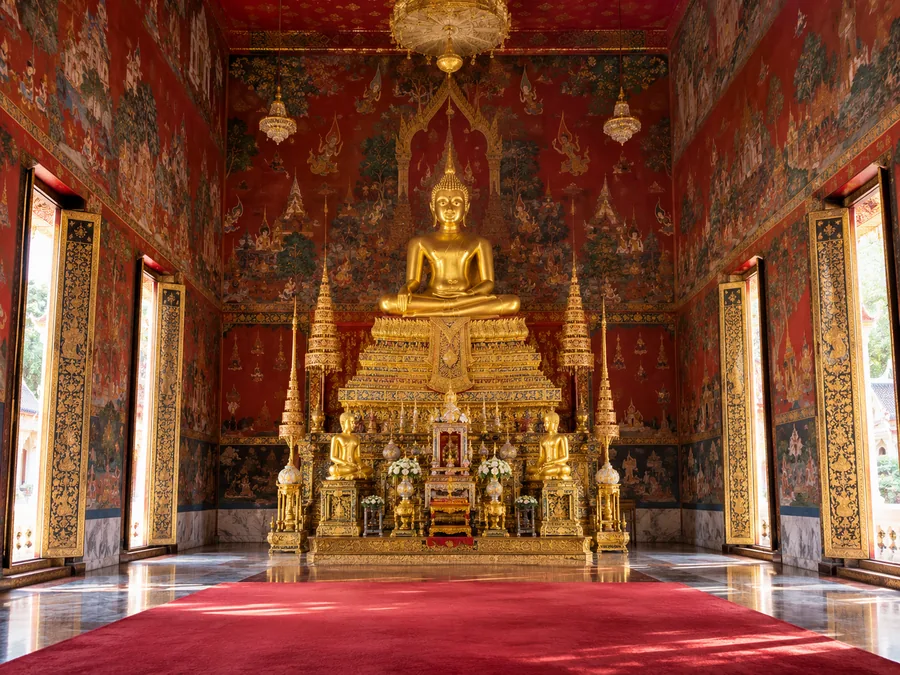
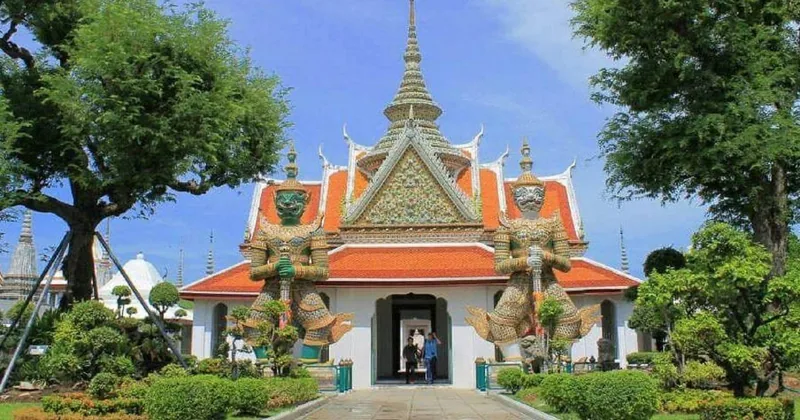
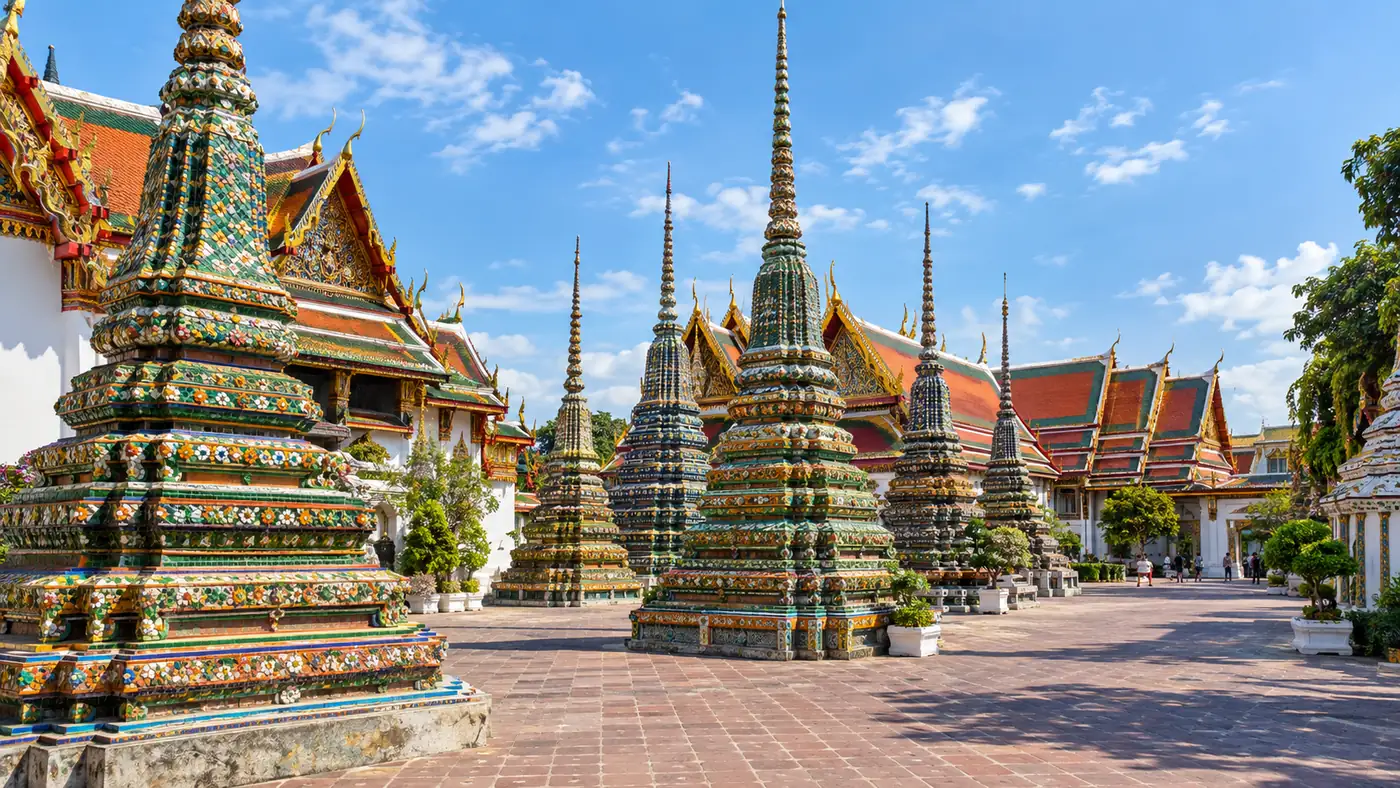
A private morning with hotel transfers and the entry tickets included: Wat Pho, Wat Arun and the quiet Wat Hong Rattanaram next door, with its Sukhothai Buddha image. Rated 4.9 from 50 reviews.
Explore the private three-temple morningWhat is the history of Wat Arun in short?
The temple goes back to the Ayutthaya period, when it was called Wat Makok. King Taksin made it a royal temple of his Thonburi capital around 1767, it housed the Emerald Buddha from 1779 until 1784, and Kings Rama II and Rama III built the great prang you see today.
- Wat Makok: in the Ayutthaya period this was a small temple named after the makok, a local olive tree.
- King Taksin: after the fall of Ayutthaya he founded his capital at Thonburi around 1767, on this bank of the river, and the temple became Wat Chaeng.
- The Emerald Buddha: it was kept here from 1779 until 1784, when it moved across the river to Wat Phra Kaew, inside the Grand Palace.
- Rama II and Rama III: Rama II began enlarging the central prang, and Rama III completed it around 1851. The prang is officially described as over 80 metres tall.
- The porcelain: the tiers are covered in pieces of Chinese porcelain and seashells. Much of the porcelain arrived as ballast on ships from China.
- The name: Wat Arun means Temple of Dawn, and the name is usually linked to Aruna, the Indian god of dawn.
- Restoration: the Fine Arts Department restored the prang from 2013 to 2017. The Phra Prang is on Thailand's UNESCO tentative list.
You may already carry the temple in your pocket: it is pictured on the older 10-baht coins you may still get in change.
The whole story told on the spot: the Grand Palace, Wat Pho and the boat to Wat Arun with a guide who handles the ticket queues, rated 4.8.
Check dates for the Grand Palace, Wat Pho and Wat Arun tourShould you visit alone or with a guide?
Alone is easy: the ferry, the ticket and the layout are simple, and an hour is enough. A guide adds the stories behind the giants, the porcelain and the kings, and sets the order of a longer day.
On your own, take the ferry from Tha Tien pier, pay at the counter and follow the route in this guide. Temple signs are short, so read the history section before you go. With a guide, you get the Ramakien characters explained, help at the Grand Palace ticket queue if you combine the two, and someone who knows when each place is calmest. The evening tour (4.6 from 721 reviews) is the one that includes the Wat Arun ticket and shows you the prang as the lights come on. The tours are compared side by side on the homepage.
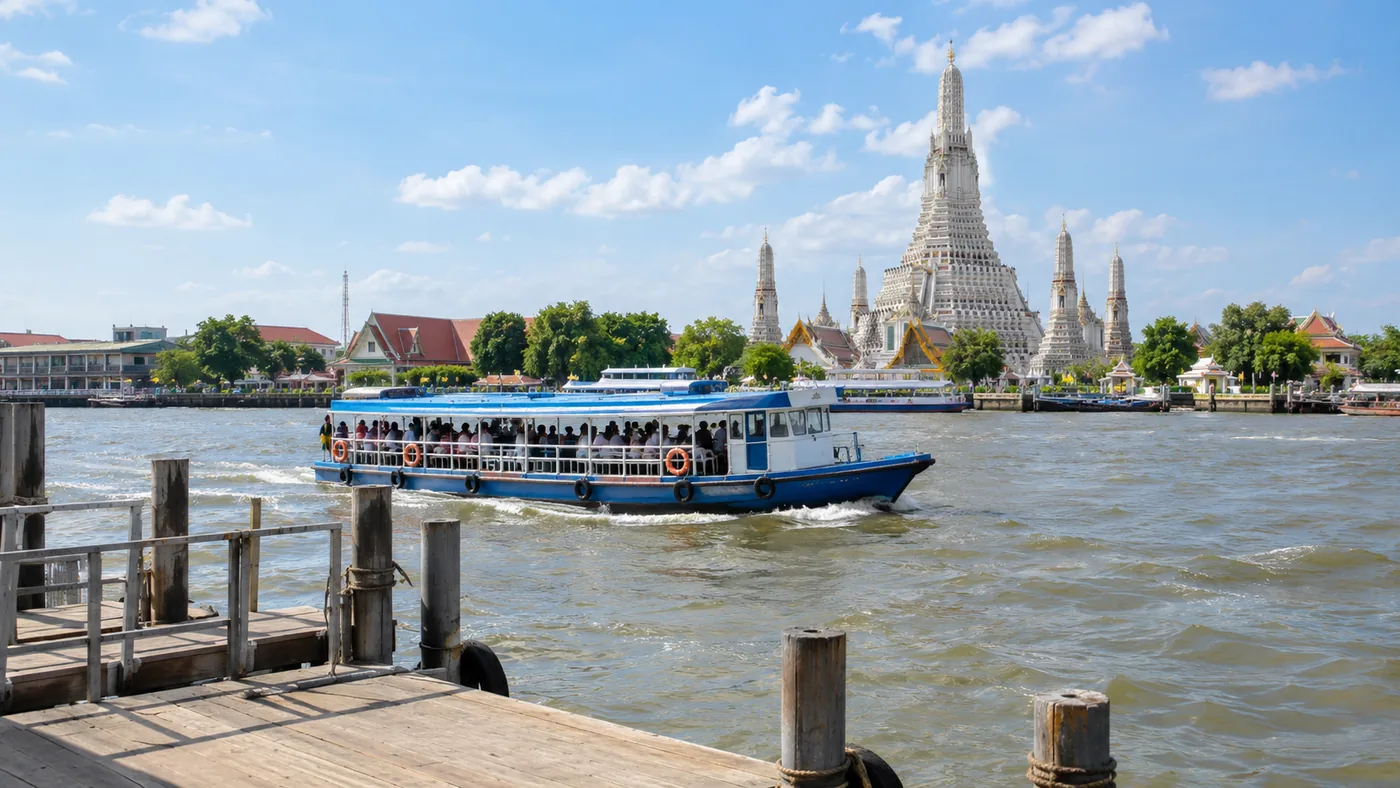
Wat Pho before closing, Wat Arun as the sun goes down and the prang is lit, then a tuk tuk to Chinatown, with both temple tickets included.
Check dates for the evening temples and tuk tuk tourFrequently asked questions
Can I buy Wat Arun tickets online?
No. Tickets are sold only at the counter by the main entrance, so there is nothing to book ahead. Online offers that mention Wat Arun are tours or boat passes, and most leave the entry fee for you to pay at the gate.
Can I pay the Wat Arun entry fee by card?
Bring cash. The counter is used to cash payments, and small notes make it quick. You also need coins or small notes for the cross-river ferry.
Is the top of the prang open?
No. Visitors can climb only to the lower terrace. The upper levels have been closed since the restoration of 2013 to 2017.
How long does a visit inside Wat Arun take?
45 to 90 minutes. An hour is enough to climb to the terrace, see the ordination hall and the giant guardians, and walk around the cloister.
Ready to book
Choose your tour
Check your date and the live price on GetYourGuide; the refund terms are shown on each option.
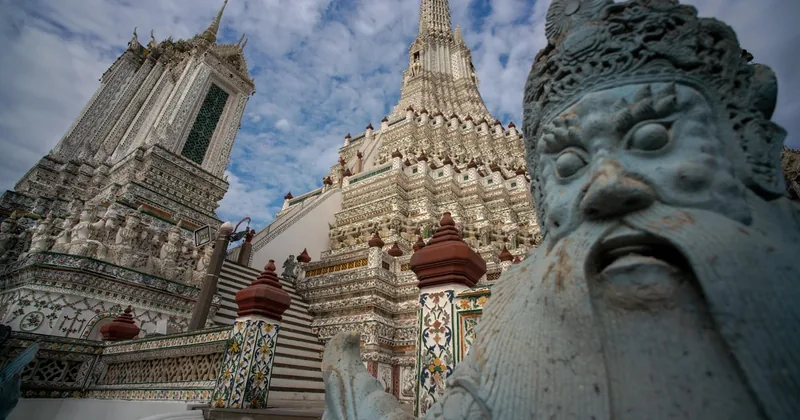
Wat Pho & Wat Arun Walking Tour
- Wat Pho and the Reclining Buddha with a guide
- The ferry across the Chao Phraya to Wat Arun
- Wat Arun's central prang and courtyard explained
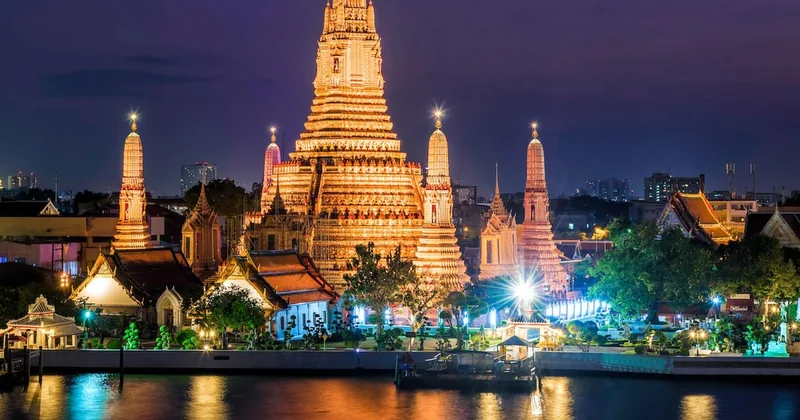
Evening Wat Arun, Wat Pho & Tuk Tuk
- Wat Pho and Wat Arun entry tickets
- The ferry across the river and back
- Wat Arun at sunset, then lit up after dark
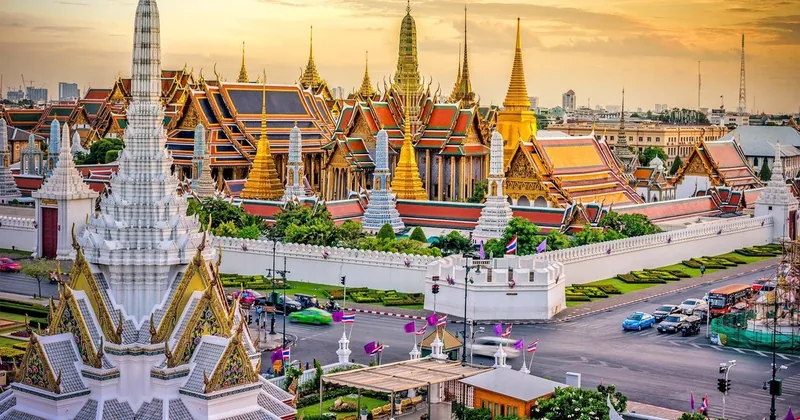
Grand Palace, Wat Pho & Wat Arun Tour
- The Grand Palace and the Temple of the Emerald Buddha
- Wat Pho and its Reclining Buddha
- The boat across the river to Wat Arun